
From historic Binondo and traditional Manila neighbourhoods to the restaurants of Makati and BGC, Metro Manila offers very different food experiences depending on where you choose to eat.
There is no single restaurant district that represents Manila’s food scene. Metro Manila is enormous, and each area has its own character.
Some neighbourhoods are best for traditional Filipino food and inexpensive local eateries. Others offer international restaurants, modern Filipino cooking, cafés, rooftop dining and lively evening scenes.
Here are some of the best areas to explore when you’re hungry.
Binondo
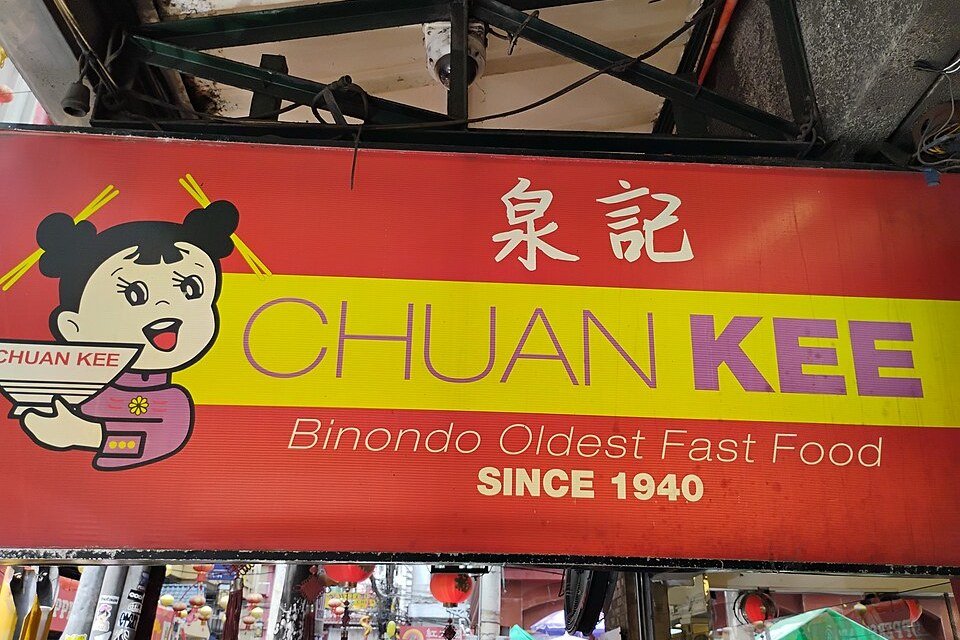
For history, atmosphere and food in the same neighbourhood, Binondo is one of Manila’s most interesting choices.
Known as the world’s oldest Chinatown, its busy streets are packed with restaurants, bakeries, noodle houses and small food businesses reflecting centuries of Chinese-Filipino culture.
Dumplings, noodles, lumpia and hopia are among the foods visitors commonly seek out, but wandering the smaller streets and discovering somewhere unexpected is part of the experience.
Binondo works particularly well as a daytime food trip because you can combine eating with sightseeing.
Intramuros
Eating inside Intramuros gives you the opportunity to combine a meal with one of Manila’s most important historic areas.
Restaurants and cafés are scattered throughout the old walled city, ranging from casual stops to places serving Filipino dishes in historic surroundings.
It is especially convenient if you are already visiting Fort Santiago, Manila Cathedral or San Agustin Church.
Rather than travelling somewhere else specifically for lunch, take a break during your exploration and continue walking afterwards.
Malate
Malate has long been associated with restaurants, nightlife and Manila’s international side.
The area offers a mixture of Filipino and international food, from casual restaurants and cafés to places that become livelier in the evening.
Its location near Roxas Boulevard also makes it convenient if you plan to spend part of the day around Manila Bay.
Makati
Makati offers one of Metro Manila’s widest selections of restaurants.
Around areas such as Greenbelt, Legazpi Village and Salcedo Village, you’ll find Filipino restaurants alongside Japanese, Korean, European and other international cuisines.
There are options at many price levels, although the area is particularly strong for visitors looking for comfortable sit-down restaurants and more contemporary dining.
Makati is also easy to combine with shopping, cafés and an evening out.
Poblacion
Within Makati, Poblacion has developed its own distinctive food and nightlife scene.
The neighbourhood contains an unusually dense mixture of small restaurants, bars and creative food concepts, with cuisines from the Philippines and around the world.
It becomes particularly active in the evening, making it a good choice if dinner is only the beginning of your night.
Bonifacio Global City
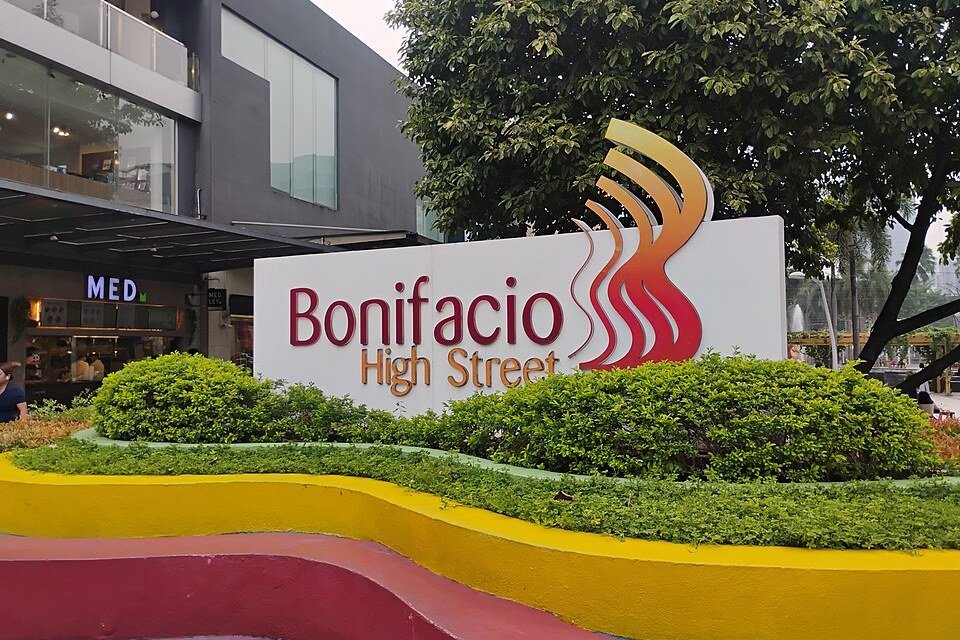
Bonifacio Global City, usually called BGC, offers a very different atmosphere from historic Manila.
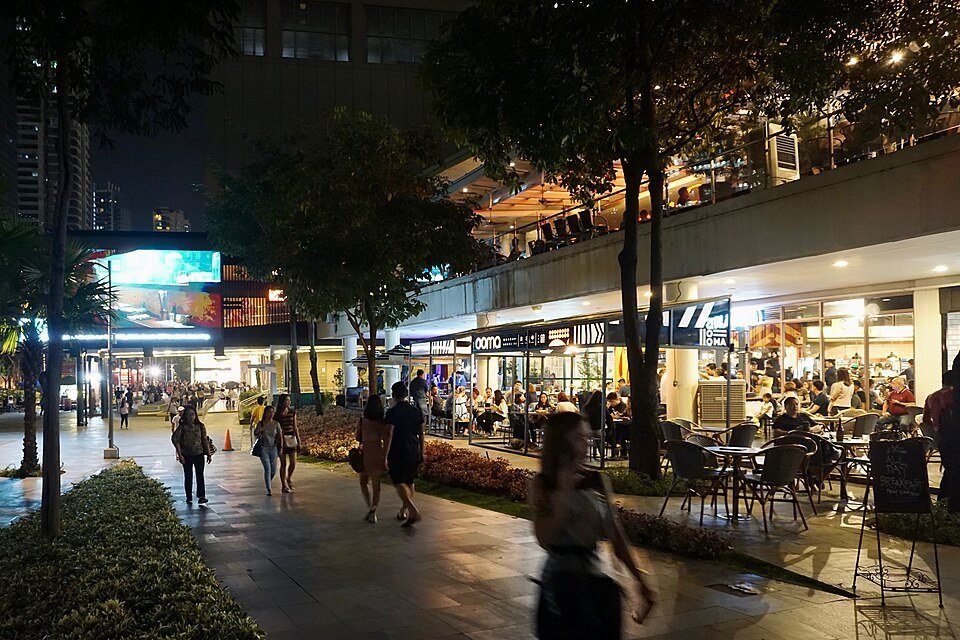
Modern streets, shopping centres and pedestrian-friendly areas are surrounded by restaurants ranging from familiar international chains to upscale dining and contemporary Filipino food.
Bonifacio High Street is an easy starting point if you simply want to walk around and choose somewhere that looks appealing.
BGC is particularly convenient for combining dinner with shopping or an evening stroll.
Quezon City
Quezon City covers a huge area, so its food scene is spread across numerous neighbourhoods rather than concentrated in one district.
Areas such as Tomas Morato and Maginhawa have become well known for restaurants and casual dining.
Quezon City can be especially interesting if you want to explore beyond Manila’s main tourist districts and experience places frequented heavily by local residents.
Food Courts and Shopping Malls
Metro Manila’s enormous shopping malls are also important dining destinations.
Large malls often contain dozens or even hundreds of places to eat, ranging from inexpensive fast-food outlets to Filipino restaurant chains and international restaurants.
For a first-time visitor, food courts can actually be useful places to experiment. Several different dishes are available in one place, prices are usually clear, and everyone in a group can choose something different.
They are also very convenient when Manila’s heat or rain makes outdoor exploration less appealing.
Markets and Local Eateries
Some of the most everyday Filipino food experiences are found away from polished restaurant districts.
Small neighbourhood eateries, commonly called carinderias, serve prepared dishes that customers choose from a counter. They can be an inexpensive way to try home-style Filipino food.
Markets and street-food areas provide another side of the city’s food culture, particularly for visitors who enjoy exploring rather than planning every meal in advance.
Which Area Should You Choose?
If you want history and food, start with Binondo or Intramuros.
For modern restaurants and a comfortable evening out, Makati and BGC offer enormous choice.
For food combined with nightlife, Poblacion is one of the most obvious options.
For a more local neighbourhood food experience, explore beyond the major tourist areas or visit one of Quezon City’s established dining districts.
And if convenience matters most, Manila’s major shopping malls make finding somewhere to eat extremely easy.
Explore Manila Through Its Food
Food is one of the easiest ways to experience the different personalities of Metro Manila.
You can eat dumplings in the narrow streets of Binondo, have lunch surrounded by the history of Intramuros, explore modern Filipino cooking in Makati and finish another evening among the restaurants and lights of BGC.
For an introduction to some of the flavours and dishes you’ll encounter, see Try Filipino Food in Manila.
← Explore Food & Restaurants in Manila
- Photo Credits:
- Chuan Kee Restaurant, Binondo: Ralff Nestor Nacor, via Wikimedia Commons, licensed under CC BY-SA 4.0. Cropped/resized by Manila.PH. Source: https://commons.wikimedia.org/wiki/File:Chuan_Kee_Restaurant,_Binondo,_Manila,_May_2025.jpg · Licence: https://creativecommons.org/licenses/by-sa/4.0/
- Bonifacio High Street, BGC: Ralff Nestor Nacor, via Wikimedia Commons, licensed under CC BY-SA 4.0. Cropped/resized by Manila.PH. Source: https://commons.wikimedia.org/wiki/File:Bonifacio_High_Street,_BGC,_Taguig,_Aug_2026_(1).jpg · Licence: https://creativecommons.org/licenses/by-sa/4.0/
- Restaurants at Bonifacio High Street: Vyacheslav Argenberg, via Wikimedia Commons, licensed under CC BY 4.0. Cropped/resized by Manila.PH. Source: https://commons.wikimedia.org/wiki/File:Bars_at_Bonifacio_High_Street.jpg · Licence: https://creativecommons.org/licenses/by/4.0/

.jpg)
