
Discover one of Manila’s most important public spaces, where Philippine history, national identity, gardens, monuments, and city life come together.
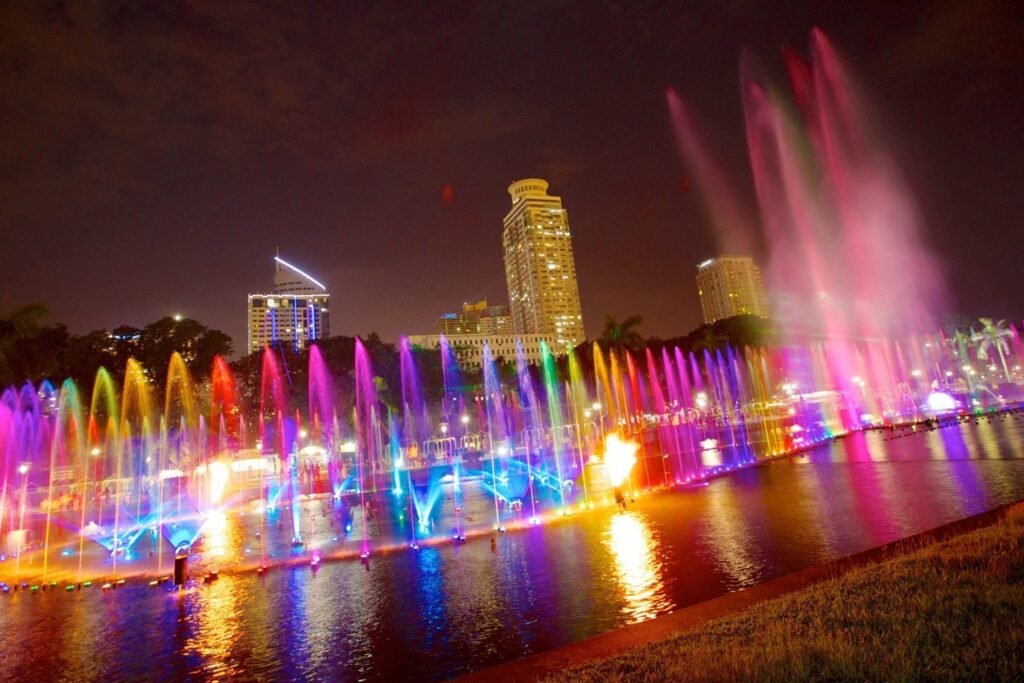
Rizal Park, also widely known as Luneta Park, is one of the most significant landmarks in Manila. Located beside historic Intramuros and close to Manila Bay, the large urban park has played an important role in Philippine history for generations.
Today it is both a national landmark and an everyday public space where visitors can explore monuments, walk through gardens, relax, and experience a quieter side of central Manila.
The Rizal Monument
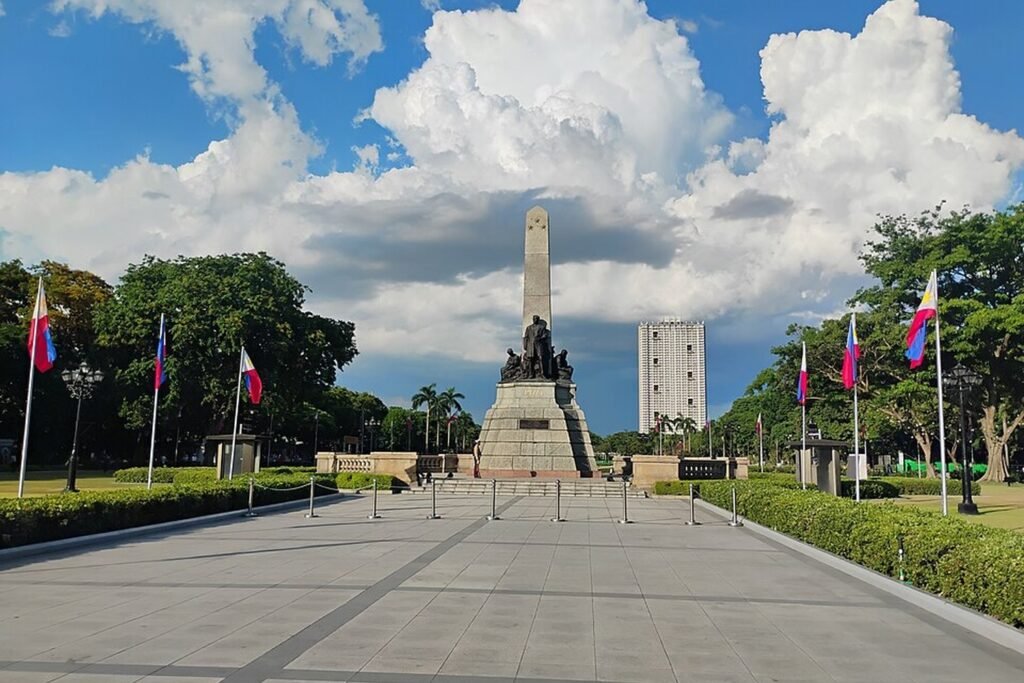
The most famous landmark in the park is the Rizal Monument, dedicated to Philippine national hero José Rizal.
Rizal was executed nearby on December 30, 1896, after being convicted by the Spanish colonial authorities. His writings and ideas helped inspire the movement for Philippine independence.
The monument contains Rizal’s remains and is guarded by members of the Philippine Marine Corps. It has become one of the country’s most important symbols of national identity.
The Site of Rizal’s Execution
Visitors can also see the area commemorating the execution of José Rizal.
The site helps place the monument and the surrounding park within the larger story of the Philippine struggle for independence.
For visitors interested in Philippine history, combining Rizal Park with nearby Intramuros provides an excellent introduction to this period.
Gardens and Open Spaces
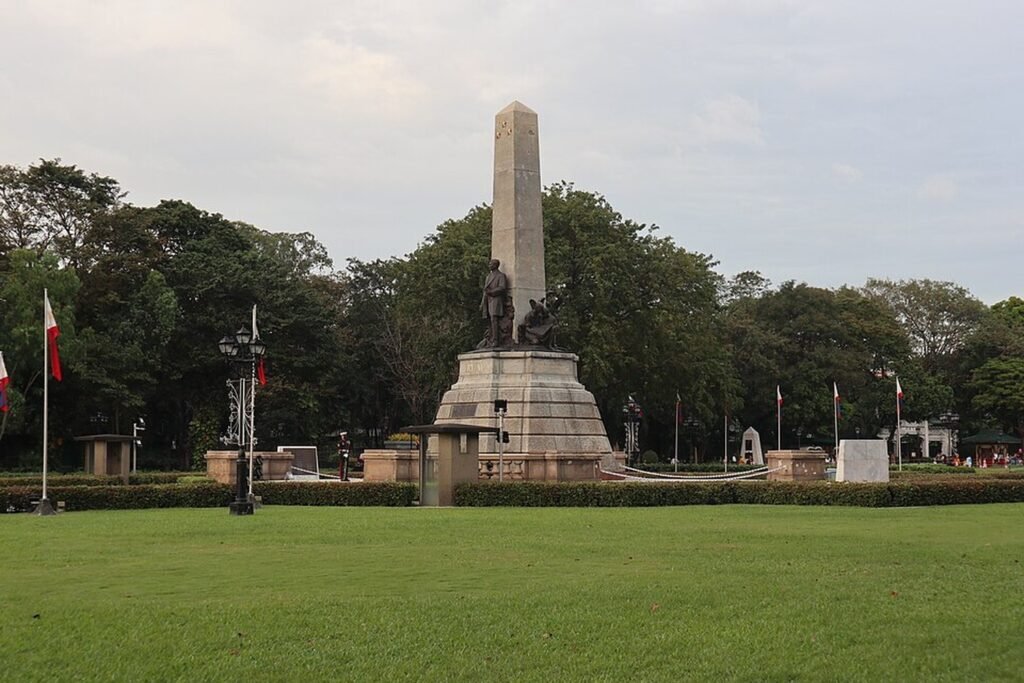
Rizal Park covers a large area, providing welcome green space in the middle of busy Manila.
Lawns, trees, gardens, fountains, pathways, and landscaped areas make it a pleasant place for walking or simply taking a break from sightseeing.
Filipino families and groups of friends also use the park for recreation and relaxation, particularly later in the day when temperatures become more comfortable.
National Museum Complex
Several of the Philippines’ most important museums are located immediately beside Rizal Park.
The National Museum of Fine Arts, National Museum of Anthropology, and National Museum of Natural History are all within easy walking distance.
Together they make this part of Manila particularly worthwhile for anyone interested in Philippine history, culture, art, archaeology, and the natural world.
A Park with Philippine History

The area now occupied by Rizal Park has witnessed important moments throughout Philippine history.
Its association with José Rizal made it especially significant, but the park has also hosted major national ceremonies, public gatherings, celebrations, political events, and historic occasions.
Walking through the park therefore means walking through a place that remains closely connected with the story of the Philippines.
When to Visit
Rizal Park can be visited throughout the day, but Manila’s heat can make the middle of the day uncomfortable.
Morning and late afternoon are particularly pleasant times for walking around the park. The atmosphere changes again toward evening as more people arrive and the surrounding city begins to light up.
Allow one to two hours for a relaxed visit, or considerably longer if you combine the park with the National Museum Complex.
Getting to Rizal Park
Rizal Park is located in central Manila between Intramuros, Ermita, and Manila Bay.
Taxis and ride-hailing services provide an easy way to reach the area from elsewhere in Metro Manila. Public transportation is also available nearby.
If you are already exploring Intramuros, it is practical to combine both destinations on the same day.
What to See Nearby
Rizal Park is surrounded by several of Manila’s major attractions.
Intramuros lies just to the north, while the National Museum Complex borders the park. Manila Bay is a short distance to the west, and the streets of Ermita begin nearby.
This concentration of attractions makes the area one of the best parts of Manila to explore on foot.
Experience Luneta
Rizal Park is more than a monument surrounded by greenery. It is simultaneously a historic site, national symbol, city park, meeting place, and part of everyday Manila.
Spend some time walking rather than simply stopping for a photograph of the Rizal Monument.
Understanding Rizal Park helps you understand an important part of the history and identity of the Philippines.
← Explore more Places to Visit in Manila
- Photo Credits:
- Rizal Park Dancing Fountain: Patrick Roque (Patrickroque01), via Wikimedia Commons, licensed under CC BY-SA 4.0. Cropped/resized by Manila.PH. Source: https://commons.wikimedia.org/wiki/File:Rizal_Park_-_dancing_fountain_(Manila;_12-30-2019).jpg · Licence: https://creativecommons.org/licenses/by-sa/4.0/
- Rizal Monument: Ralff Nestor Nacor, via Wikimedia Commons, licensed under CC BY-SA 4.0. Cropped/resized by Manila.PH. Source: https://commons.wikimedia.org/wiki/File:Rizal_Monument,_Manila,_May_2025.jpg · Licence: https://creativecommons.org/licenses/by-sa/4.0/
- Rizal Park Monument: Patrick Roque (Patrickroque01), via Wikimedia Commons, licensed under CC BY-SA 4.0. Cropped/resized by Manila.PH. Source: https://commons.wikimedia.org/wiki/File:Rizal_Park_monument_(Manila;_12-31-2022).jpg · Licence: https://creativecommons.org/licenses/by-sa/4.0/
- Rizal Monument with Philippine Flags: Patrick Roque (Patrickroque01), via Wikimedia Commons, licensed under CC BY-SA 4.0. Cropped/resized by Manila.PH. Source: https://commons.wikimedia.org/wiki/File:Rizal_Monument_with_philippine_flags_(Rizal_Park,_Manila;_2016-12-31).jpg · Licence: https://creativecommons.org/licenses/by-sa/4.0/
.jpg)

.jpg)
.jpg)