
From grilled skewers and crispy snacks to sweet treats and Filipino favourites, Manila’s street food offers an inexpensive and informal way to experience local flavours.
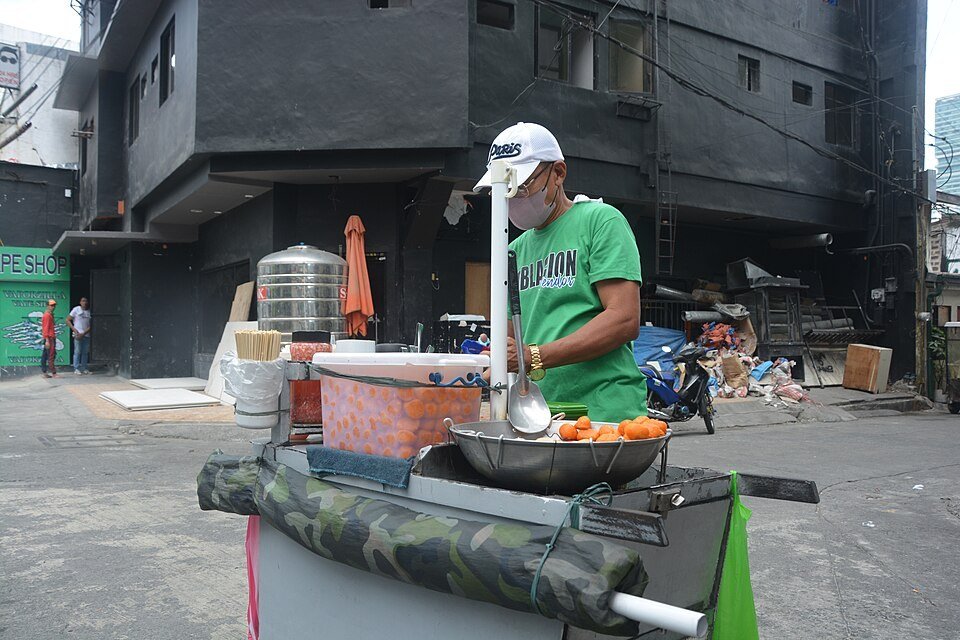
Street food is part of everyday life across Metro Manila. Vendors appear near markets, transport areas, schools, business districts and neighbourhood streets, particularly from late afternoon into the evening.
For visitors, street food can be one of the most memorable ways to experience the city. You can try several things without spending much, and many snacks are prepared right in front of you.
Isaw
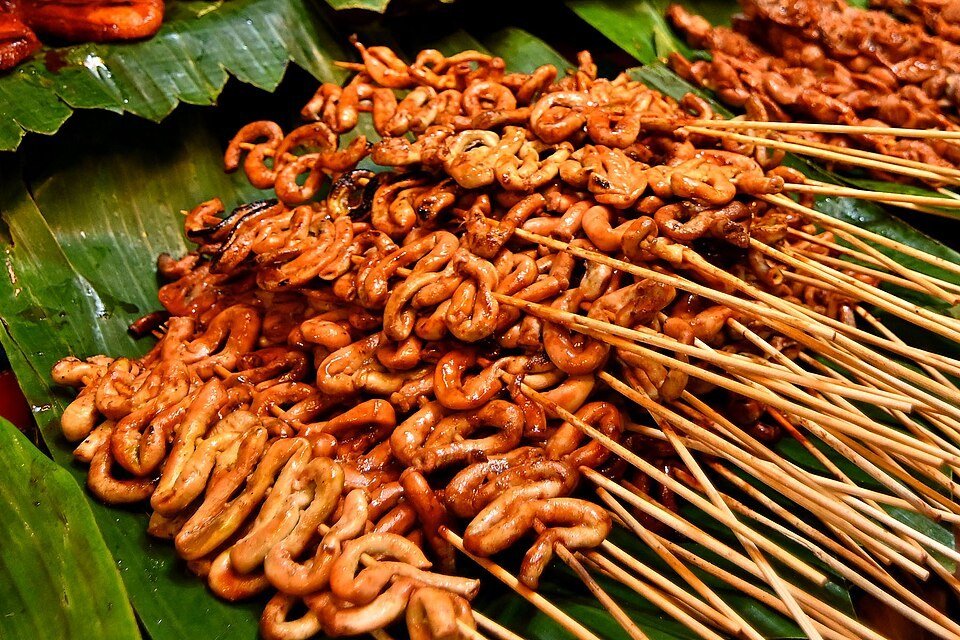
Isaw is one of the most recognisable Filipino street foods.
Chicken or pork intestines are cleaned, seasoned, placed on skewers and grilled over charcoal. They are usually brushed with sauce while cooking and served with vinegar or another dipping sauce.
The smoky smell from an isaw grill is difficult to miss when walking through a busy street-food area.
Fish Balls and Squid Balls
Fish balls are among the easiest street foods to try.
They are fried in oil and served on skewers, usually with a choice of sweet, spicy or vinegar-based sauces.
Squid balls and similar fried snacks are often sold from the same cart, making it easy to sample several varieties.
Kwek-Kwek
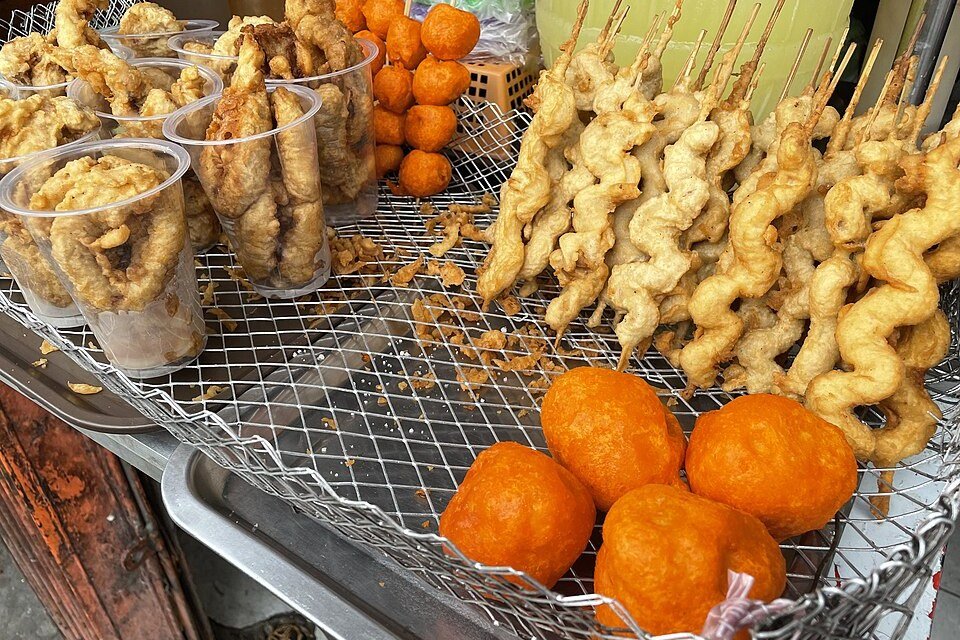
Bright orange kwek-kwek immediately stands out on a street-food stall.
Quail eggs are coated in an orange-coloured batter and deep-fried, then eaten with vinegar or a sweet and spicy dipping sauce.
A larger version made with chicken or duck eggs is commonly known as tokneneng.
Barbecue
Filipino-style barbecue is another very approachable choice.
Small pieces of marinated pork or chicken are threaded onto skewers and grilled over charcoal. The marinade often gives the meat a slightly sweet flavour, while grilling adds a smoky finish.
Freshly grilled barbecue with rice can easily become a simple meal rather than just a snack.
Banana Cue
Street food in Manila isn’t all savoury.
Banana cue is made from bananas coated in caramelised brown sugar and fried, usually served on a bamboo skewer.
It is sweet, inexpensive and easy to eat while walking.
Turon
Turon is another popular banana-based snack.
Slices of banana are wrapped in a thin spring-roll wrapper, often with jackfruit, and fried with sugar until the outside becomes crisp and caramelised.
The combination of crunchy pastry and warm sweet banana makes it one of the easiest Filipino snacks to enjoy on a first encounter.
Taho
Taho is traditionally sold by vendors walking through residential neighbourhoods, particularly in the morning.
It consists of soft silken tofu served warm with sweet syrup and small tapioca pearls.
You may hear a vendor calling “Tahoooo!” before you actually see him.
Balut
Few Filipino foods generate as much curiosity among foreign visitors as balut.
It is a fertilised duck egg containing a developing embryo, boiled and eaten directly from the shell, usually with salt or vinegar.
For many Filipinos it is simply a familiar snack. For visitors, trying balut can become one of those travel experiences they remember — whether they decide they love it or only try it once.
Where to Find Street Food in Manila
Street food isn’t confined to one particular tourist destination.
You will encounter vendors throughout Metro Manila, especially around markets, busy neighbourhoods and places where large numbers of people gather.
Binondo is a particularly interesting area for food exploration, although its Chinese-Filipino specialities go well beyond what would normally be considered Filipino street food.
Night markets, neighbourhood food areas and streets near universities can also be good places to find inexpensive snacks.
Choose Busy Vendors
A simple way to choose where to eat is to look for vendors who are busy with local customers.
High turnover generally means food is being prepared and sold continuously rather than sitting for long periods.
Choose food that is cooked thoroughly and served hot, and use the same practical judgement you would when buying street food anywhere else in the world.
How Much Does Street Food Cost?
Street food is generally among the least expensive ways to eat in Metro Manila.
Rather than buying a complete meal from one vendor, try several small things from different stalls. That is part of the fun.
Bring some cash in smaller denominations, as small vendors may have limited change and may not accept cards.
Make Street Food Part of Exploring Manila
You don’t necessarily need to organise a special street-food trip.
Try something when you encounter a busy vendor while exploring a neighbourhood. Start with something familiar such as barbecue, fish balls or turon, then become more adventurous if you feel like it.
For more ideas about where to explore the city’s food scene, see Where to Eat in Manila: Best Areas for Food.
And for a broader introduction to Filipino dishes and flavours, see Try Filipino Food in Manila.
← Explore Food & Restaurants in Manila
- Photo Credits:
- Street food vendor in Manila: Jonashtand, via Wikimedia Commons, licensed under CC BY-SA 4.0. Cropped/resized by Manila.PH. Source: https://commons.wikimedia.org/wiki/File:202403_A_street_food_vendor_in_Manila_2.jpg · Licence: https://creativecommons.org/licenses/by-sa/4.0/
- Grilled isaw: Richmond Chi, via Wikimedia Commons, licensed under CC BY-SA 4.0. Cropped/resized by Manila.PH. Source: https://commons.wikimedia.org/wiki/File:Isaw_-_Street_Food.jpg · Licence: https://creativecommons.org/licenses/by-sa/4.0/
- Kwek-kwek and fried isaw: Aerous, via Wikimedia Commons, licensed under CC BY-SA 4.0. Cropped/resized by Manila.PH. Source: https://commons.wikimedia.org/wiki/File:Kwek-Kwek_and_fried_isaw.jpg · Licence: https://creativecommons.org/licenses/by-sa/4.0/


