
Discover the flavours of the Philippines through classic dishes, sizzling favourites, street food and colourful desserts while exploring Manila.
Food is one of the easiest ways to experience Filipino culture. Manila brings together cooking traditions from across the Philippines, so you can sample everything from familiar everyday dishes to regional specialities without travelling far.
For a first introduction, start with a few Filipino classics rather than trying to understand the entire cuisine at once.
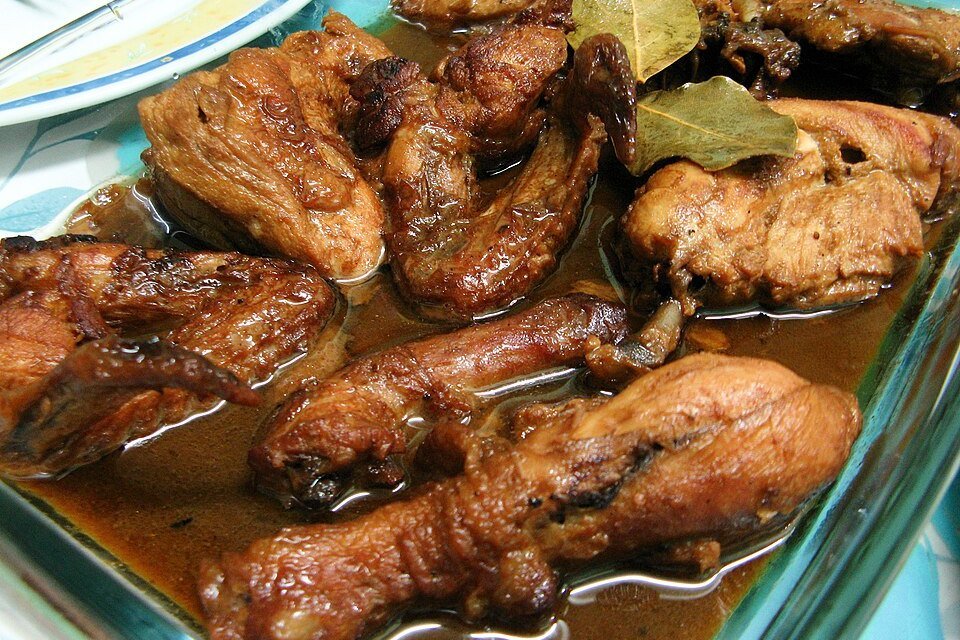
Start with Adobo
Adobo is one of the best-known Filipino dishes and a natural place to begin.
Meat — commonly chicken or pork — is cooked with ingredients such as vinegar, soy sauce, garlic, pepper and bay leaves. There are numerous variations, and families and restaurants often have their own way of preparing it.
Eat it with rice and you have one of the classic combinations of Filipino home-style cooking.
Try Sinigang
For something very different, try sinigang.
This savoury soup is known for its distinctive sour flavour, traditionally associated with ingredients such as tamarind. Different versions can contain pork, fish, shrimp or other proteins together with vegetables.
The combination of sour broth, vegetables and rice makes it particularly different from what many international visitors expect from Filipino food.
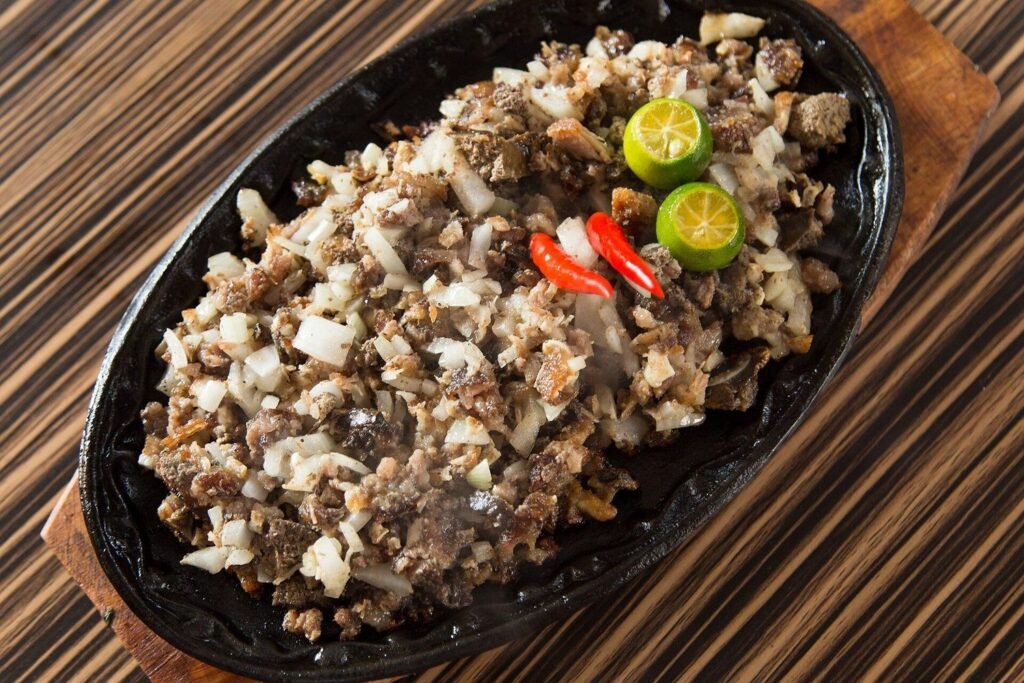
Order Sisig
Sisig gives you another side of Filipino cooking.
Traditionally associated with Pampanga, sisig has spread throughout the Philippines and is widely available in Metro Manila. Chopped pork is commonly seasoned with ingredients such as onions, chilli and calamansi and served sizzling hot.
Look Beyond the Most Famous Dishes
Adobo and sisig are good introductions, but Filipino cuisine goes much further.
Depending on where you eat, look for dishes such as kare-kare, a rich stew commonly served with a peanut-based sauce; pancit, the name used for a wide family of noodle dishes; lumpia, Filipino-style spring rolls; and lechon, roasted pig that is particularly associated with celebrations.
You will also encounter seafood, grilled meats, vegetable dishes and regional specialities from around the archipelago.
Try Manila Street Food
For a more casual experience, explore Filipino snacks and street food.
Common choices include grilled skewers and various fried snacks. Street-food culture gives you a different experience from sitting down in a restaurant and can be an inexpensive way to sample several flavours.
Choose busy, well-established vendors where food is being freshly prepared and turnover is high.
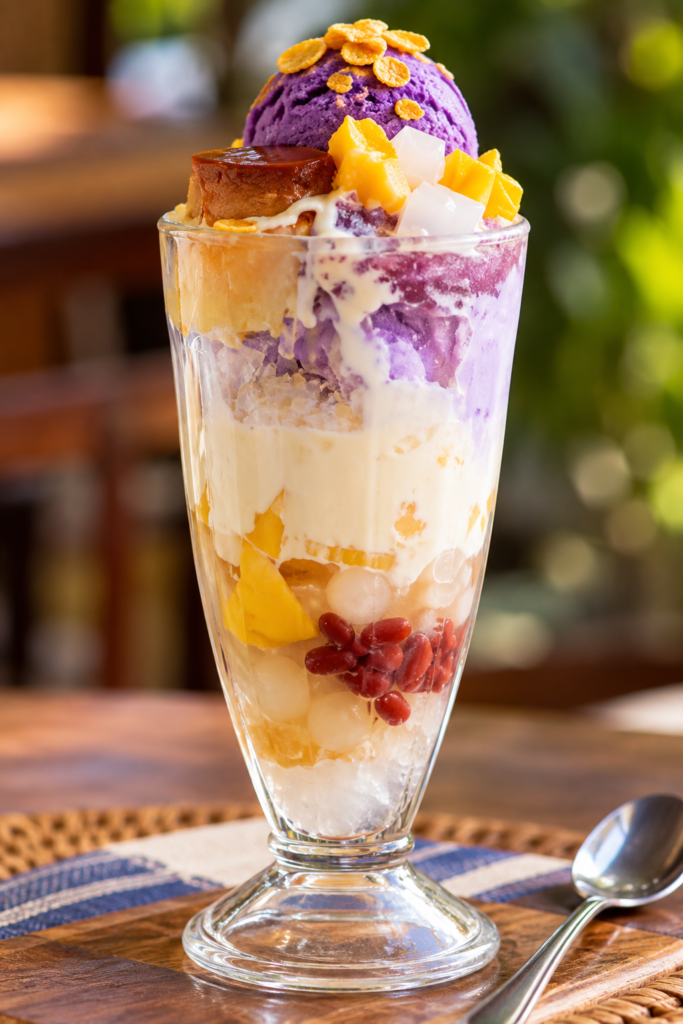
Finish with Halo-Halo
Save room for dessert.
Halo-halo — literally associated with mixing — combines shaved ice with an assortment of sweet ingredients. Depending on the version, these can include beans, fruit, jellies and other sweets, with milk and toppings such as ube or leche flan.
It is colourful, cold and particularly welcome during a hot Manila afternoon.
Where Should You Try Filipino Food?
You do not need to search for one particular restaurant to experience Filipino food in Manila.
Filipino restaurants range from inexpensive neighbourhood eateries and food courts to specialist restaurants and more refined dining rooms. Shopping malls also make it easy for first-time visitors to compare several options in one place.
As our Food & Restaurants section develops, this page will link directly to our Manila dining guides.
Try Something You Have Never Eaten Before
A good food experience in Manila does not require eating everything on a checklist.
Start with something familiar enough to enjoy, then add one dish you have never tried before.
Adobo might introduce you to Filipino home cooking, sisig to something sizzling and intensely savoury, and halo-halo to the colourful sweeter side of Filipino food.
Three dishes are already enough to make your visit to Manila taste distinctly Filipino.
← Explore more Things to Do in Manila
- Photo Credits:
- Chicken adobo: jeffreyw, via Wikimedia Commons/Flickr, licensed under CC BY 2.0. Cropped/resized by Manila.PH. Source: https://commons.wikimedia.org/wiki/File:Chicken_adobo_(Philippines)_2.jpg · Licence: https://creativecommons.org/licenses/by/2.0/
- Authentic Kapampangan sisig: Bruno Tiotuico for the Angeles City Tourism Office, via Wikimedia Commons, licensed under CC BY-SA 4.0. Cropped/resized by Manila.PH. Source: https://commons.wikimedia.org/wiki/File:Authentic_Kapampangan_Sisig.jpg · Licence: https://creativecommons.org/licenses/by-sa/4.0/
- Halo-halo: Manila.PH. Submit your photos.
_2.jpg)
