
Visit one of the Philippines’ most important churches in the historic heart of Intramuros.
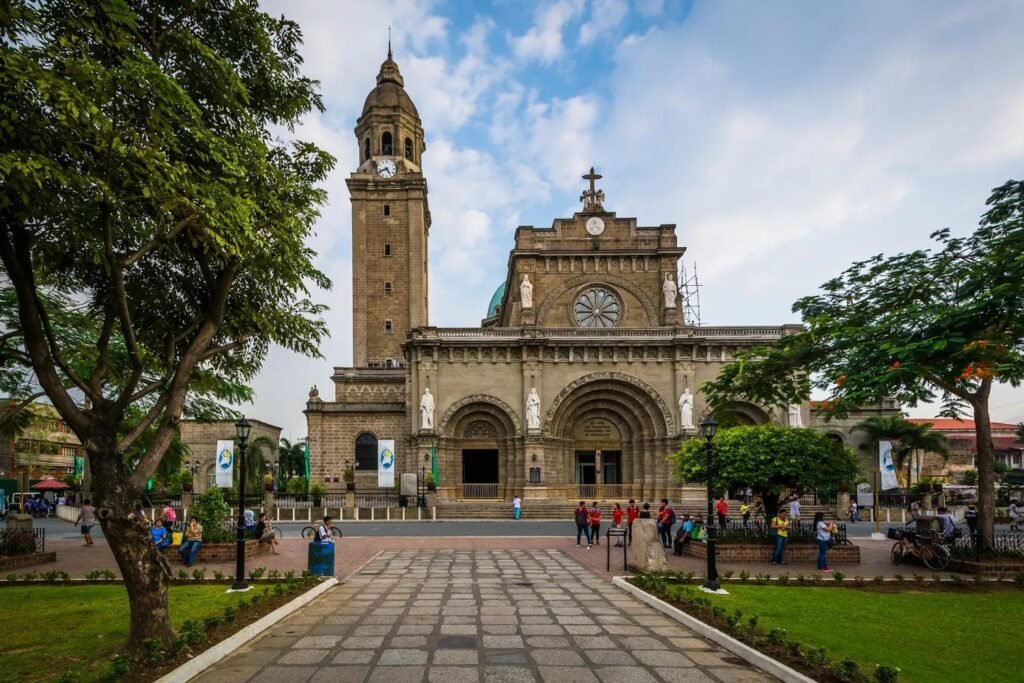
Manila Cathedral stands prominently on Plaza Roma in Intramuros, only a short walk from Fort Santiago and San Agustin Church. Officially known as the Minor Basilica and Metropolitan Cathedral of the Immaculate Conception, it is the cathedral of the Archdiocese of Manila.
The present cathedral is the latest in a succession of churches built on the site over several centuries. Earthquakes, fires and war repeatedly damaged or destroyed earlier buildings, making the cathedral’s history closely connected with the turbulent history of Manila itself.
A Cathedral Rebuilt Through History
The first cathedral on the site was established in the late 16th century. Over the centuries, successive cathedral buildings were damaged by earthquakes and other disasters and then rebuilt.
The cathedral standing today was completed in 1958 after its predecessor was destroyed during the Battle of Manila in 1945.
Its reconstruction preserved the historic importance of the site while creating the landmark visitors see today.
See the Cathedral Interior
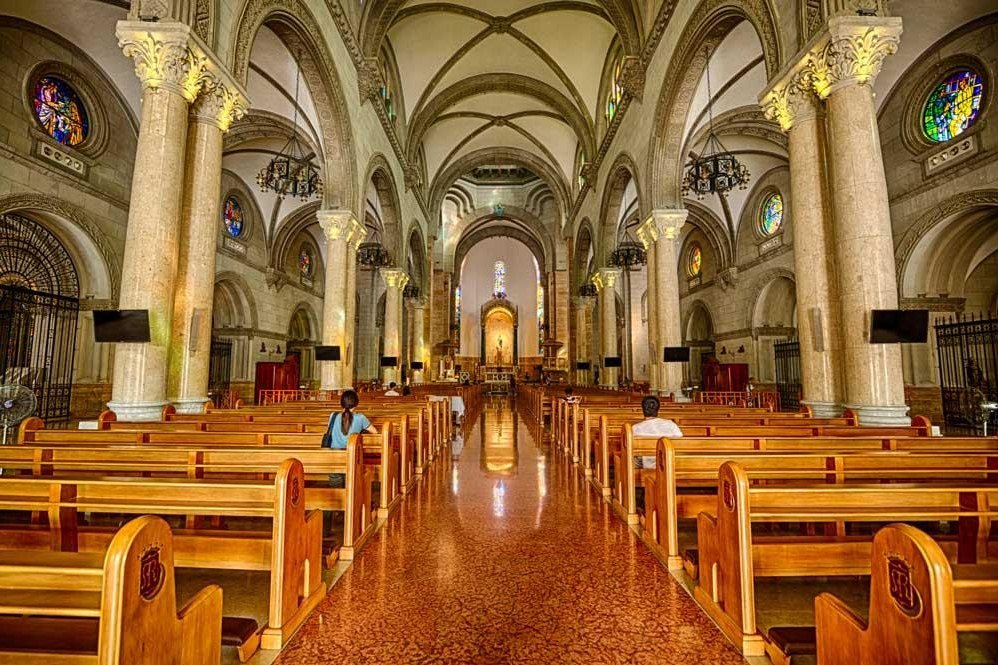
Step inside and the atmosphere changes immediately from the busy streets of Intramuros.
The high ceiling, stained-glass windows, religious artwork and long central nave create an impressive interior. Visitors can walk quietly through the cathedral when services and other church activities permit.
Manila Cathedral remains an active place of worship, so sightseeing should always respect Masses, weddings and other religious events.
Look at the Architecture
The cathedral’s exterior is dominated by its stone façade, large rose window, statues and bell tower.
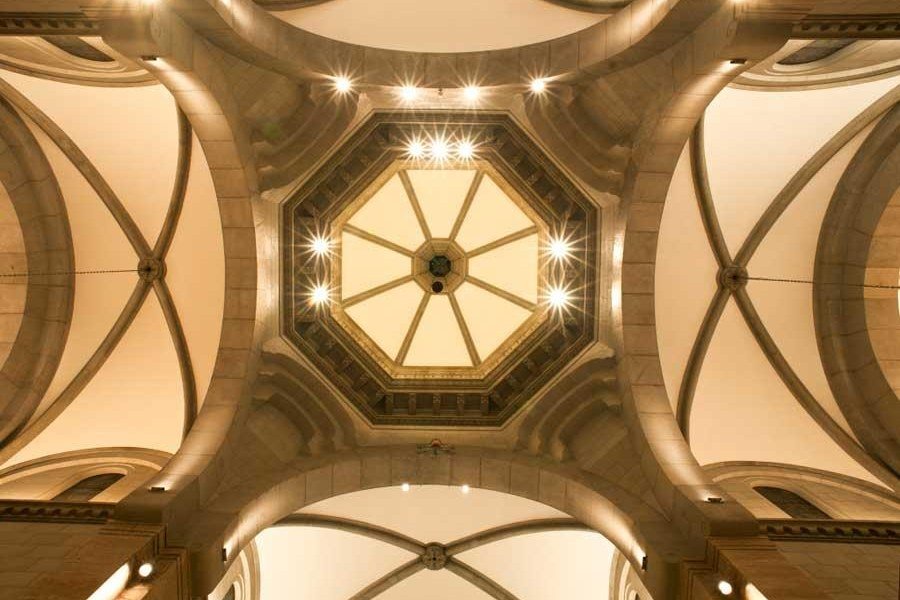
Inside, one of its most striking architectural features is the dome rising above the central part of the church. Looking upward also reveals rows of clerestory windows that bring light into the cathedral.
Plaza Roma
The cathedral faces Plaza Roma, one of the central open spaces of Intramuros.
This makes the area a good place to pause while exploring the old walled city. Several important historic sites are within easy walking distance, and the cathedral façade provides one of Intramuros’ most recognisable views.
How Much Time Should You Allow?
Allow approximately 30 to 45 minutes to see the cathedral at a comfortable pace.
You can spend longer if you are particularly interested in church history or architecture, but Manila Cathedral works especially well as part of a wider walking tour of Intramuros.
Visiting the Cathedral
Manila Cathedral is an active Roman Catholic church rather than simply a tourist attraction.
Opening arrangements can be affected by Masses, weddings, religious celebrations and special events. Visitors should therefore check current information when planning a visit and dress appropriately for an active place of worship.
Getting to Manila Cathedral
Manila Cathedral is located at Plaza Roma in Intramuros.
Once inside Intramuros, the cathedral is easily reached on foot from many of the district’s major attractions. Taxis and ride-hailing services can also take visitors close to the cathedral.
What to See Nearby
- Fort Santiago
- San Agustin Church
- Casa Manila
- Plaza de Roma
- Rizal Park
- Binondo
Tips for Visiting Manila Cathedral
Visit earlier in the day if you want to combine the cathedral with several other Intramuros attractions.
Take some time to look at the building from Plaza Roma before entering. Inside, keep voices low and allow worshippers their space.
The cathedral, San Agustin Church and Fort Santiago can comfortably form part of the same Intramuros walking itinerary.
Experience Manila Cathedral
Manila Cathedral combines architecture, faith and Philippine history in a single landmark. Its repeated destruction and rebuilding also make it a striking symbol of Manila’s ability to survive and rebuild through centuries of upheaval.
← Explore more Places to Visit in Manila
- Photo Credits:
- Manila Cathedral exterior: Jorge Láscar, via Wikimedia Commons, licensed under CC BY 2.0. Cropped/resized by Manila.PH. Source: https://commons.wikimedia.org/wiki/File:Manila_Cathedral,_Intramuros,_Manila,_Philippines.jpg · Licence: https://creativecommons.org/licenses/by/2.0/
- Manila Cathedral interior: Jorge Láscar, via Wikimedia Commons, licensed under CC BY 2.0. Cropped/resized by Manila.PH. Source: https://commons.wikimedia.org/wiki/File:Manila_Cathedral,_Intramuros,_Manila,_Philippines_-_interior.jpg · Licence: https://creativecommons.org/licenses/by/2.0/
- Manila Cathedral dome: Jorge Láscar, via Wikimedia Commons, licensed under CC BY 2.0. Cropped/resized by Manila.PH. Source: https://commons.wikimedia.org/wiki/File:Manila_Cathedral,_Intramuros,_Manila,_Philippines_-_interior.jpg · Licence: https://creativecommons.org/licenses/by/2.0/

